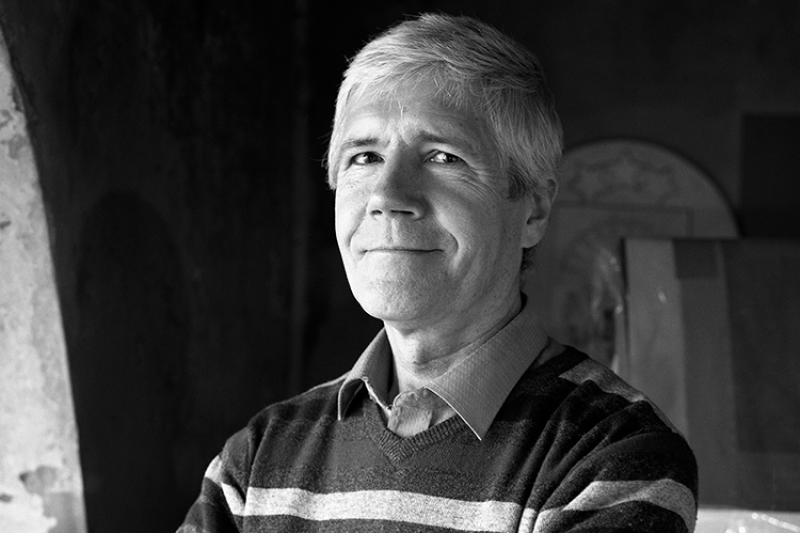
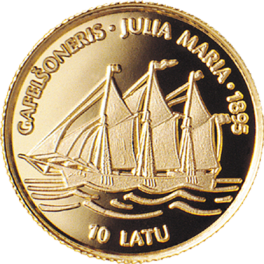
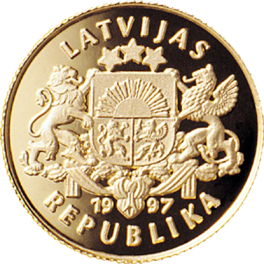
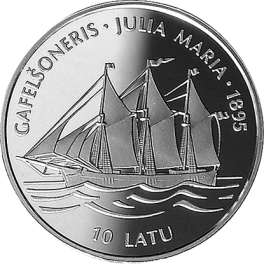
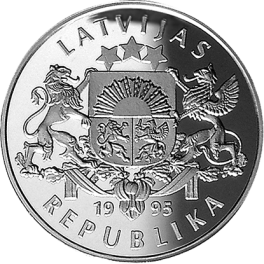
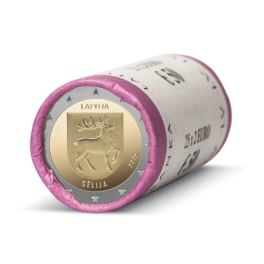
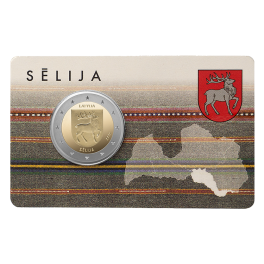
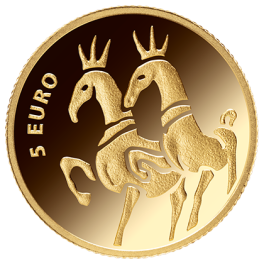
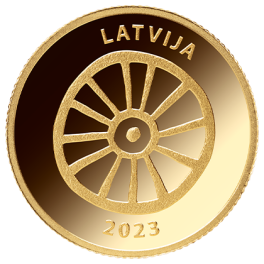
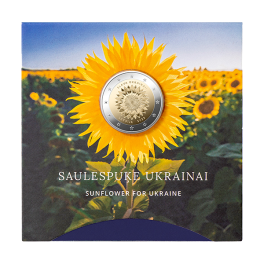
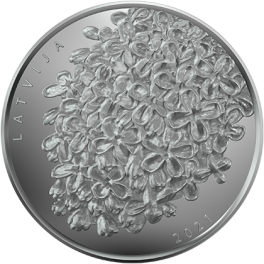
After several years of collaboration on the silver coin series "800 Years of Riga," dedicated to Riga's anniversary, graphic artist Gunārs Cālītis had this to say about Jānis Strupulis: "He delivers exactly what's in the drawing, with flawless execution [..]; it is simply perfect. He is irreplaceable. He is an invaluable asset to Latvia, especially Latvijas Banka." "In essence, it's like maths," admits Jānis Strupulis, "there's only one correct solution. And it also ends up looking the best. For me, it all came together naturally." His artistic output now includes plaster models for over 50 coins. However, prior to creating plaster models for Latvia's circulation coins following its regained independence, as well as for the silver and gold lats commemorative coins, and both euro circulation and collector coins, Jānis Strupulis had already established a reputation of at least 20 years in classical relief and medal art, earning international recognition and acclaim from specialists in the field. "Sculpture also encompasses subtle nuances that can only be slightly altered with the gentlest of touches. They cannot be measured by any instruments at our disposal; they can only be experienced," says Jānis Strupulis. This unique sensitivity sets him apart from others.
Jānis Strupulis was born on 28 January 1949 in Piebalga.
He graduated from the Sculpture Department of the Art Academy of Latvia in 1973.
He creates works in classical relief and medal art, having produced around 800 medals and plaquettes. His portfolio also includes small sculptures in bronze, wood, and fire clay, as well as pastel paintings (natures mortes with fruits, vegetables, and crockery characterised by illusory realism). Additionally, he excels in drawing, capturing the likenesses of notable historical and contemporary figures, and in graphic design, with contributions such as the postage stamps Ēvaldam Valteram 100 (1994) Reformācijai 500 (Reformation – 500, 2017), etc. His work in heraldry encompasses new coats of arms for municipalities, towns, parishes, and private individuals. He also created larger environmental sculptures, including a commemorative plate for the Riga's twin city, Pori, as well as commemorative plates devoted to the Latvian painter Janis Rozentāls and his wife, Finnish singer Elli Forssell, in Helsinki (2008), scenographer and art teacher Eduards Vītols in Jūrmala (2018), the outstanding cinema operator and director Juris Podnieks in Riga (2021), etc. Additionally, he designed commemorative stones dedicated to the characters Ķencis and Pāvuls from the Kaudzītis brothers' story Mērnieku laiki (Surveyor times) in Piebalga (1999) and a monument honouring ethnographer Ernests Brastiņš (who is also an adherent to Dievturība, the contemporary continuation of the Latvian ethnic religion) in Riga, created in collaboration with sculptor Uldis Sterģis (2007). His work also includes memorial stone steles dedicated to the cavaliers of the Order of Lāčplēsis in the Forest Cemetery of Tukums (2018), among others.
He has been participating in exhibitions since 1971; with nearly 400 exhibitions to his name. He has participated multiple times in the Baltic medal triennials in Vilnius (Lithuania), Dante medal art biennials in Ravenna (Italy), exhibitions organised by the International Art Medal Federation (FIDEM) in Budapest, London, the Hague, etc., as well as in FIDEM congresses (1994, 1996, 1998). The artist has held around 40 solo exhibitions both in Latvia and abroad.
He has been a member of the Latvian Artists' Union since 1978, the Latvian Medal Art Club since 1989, the Latvian Designers' Society since 1994, FIDEM since 1994, and the Medal Union of Germany, as well as an honorary member of the Latvian Academy of Sciences since 1994.
His works are held in the collections of the Latvian National Museum of Art, the Latvian Artists' Union Museum, the Museum of the History of Riga and Navigation, the Museum of Literature and Music, Pauls Stradiņš Medicine History Museum, Cēsis History and Art Museum, Jelgava History and Art Museum of Ģederts Eliass, Jūrmala City Museum, Krāslava History and Art Museum, Madona Local History and Art Museum, Valka Local History Museum, Valmiera Museum, as well as in many collections abroad – the Eastern Art Museum and State Tretyakov Gallery in Moscow, the Berlin Coin Cabinet, the Dresden Coin Cabinet, the Royal Coin Cabinet in Leiden, the Royal Collection of Coins and Medals in Copenhagen, the National Museum Zurich, the Hungarian National Gallery in Budapest, several Ukrainian museums, etc., a total of 57 museums in 16 countries.
At the Baltic medal triennials in Vilnius, he received a prize from the Lithuanian Artists' Association (1986, 1989), the main award from the Ministry of Culture of Lithuania (1995), and Vilnius City Award (1998–1999). Additionally, at Dante medal art biennials, he received the Mantova City Prize in 1994 for his work Paradiso and in 1996 for his work Dantes šķīstītavas vārti (The gate of Dante's purgatory). Jānis Strupulis received the Pauls Stradiņš Award of the Latvian Academy of Sciences in 1997 for his depiction of medical doctors and scientists in his medal designs. The artist was awarded the Order of the Three Stars (Fourth Class, 2009) of the Republic of Latvia. Latvijas Banka's collector coins with plaster models by Jānis Strupulis have been named Coins of the Year on several occasions.
The biography was prepared by Rūta Muižniece,
Master of Arts