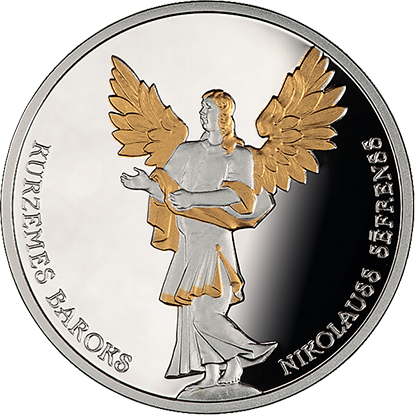
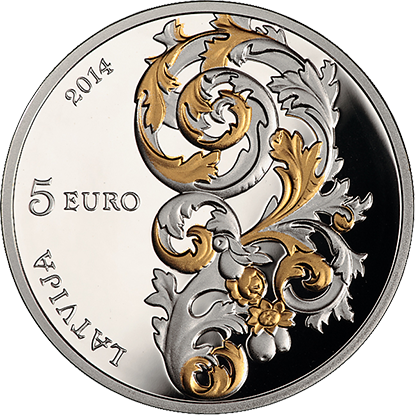
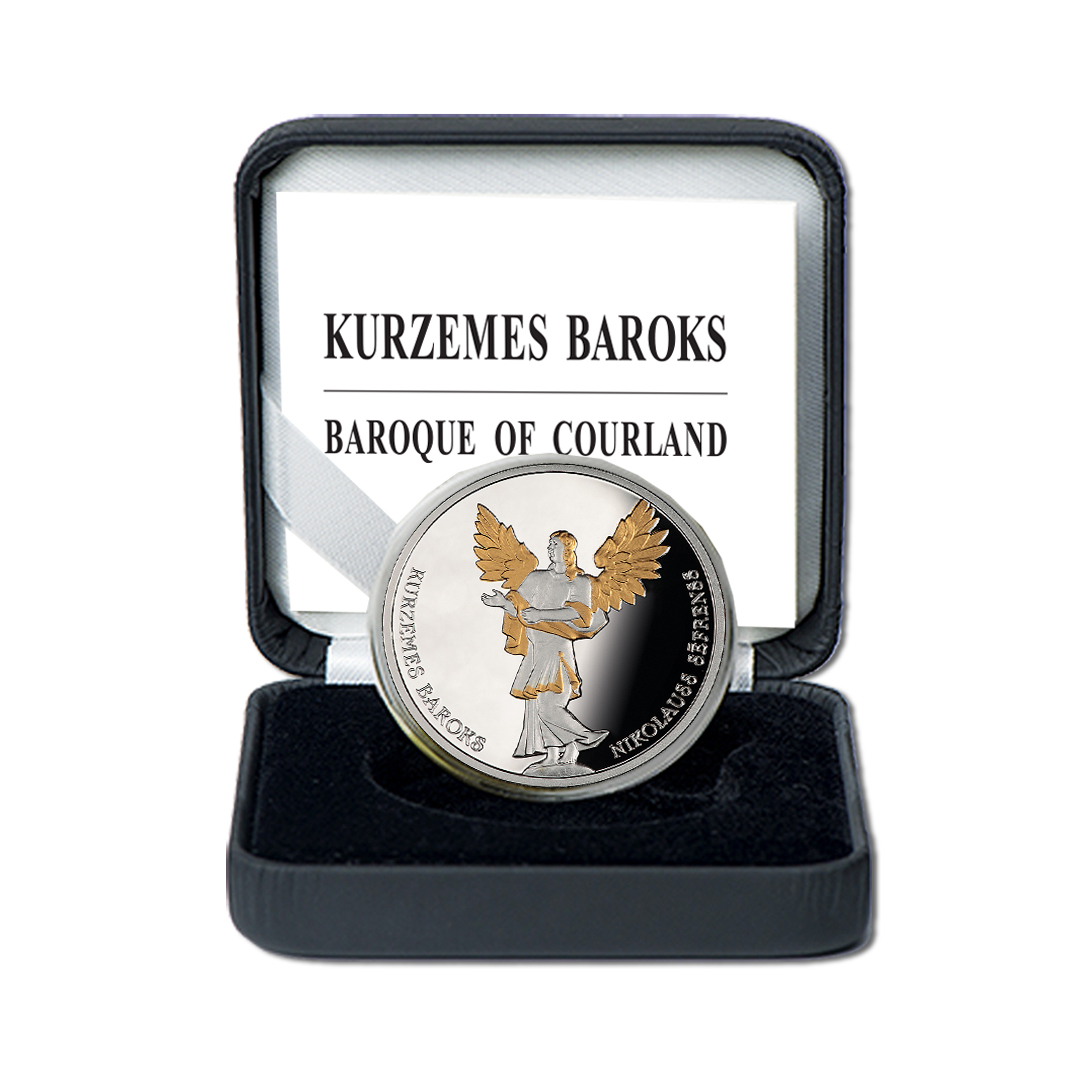
The end of the 17th and beginning of the 18th century was a time of flourishing architecture and decorative art in Courland. Estate owners competed amongst themselves for the largest and most lavish church on their property. These desires were satisfied by the woodworking workshop of Ventspils (then Windau), which had been established to be part of Duke Jacob's great shipbuilding plans. Woodcarver Nicolaus Söffrens Sr. (?–1694) made the retable and pulpit of St. Catherine's Church in Kuldīga (Goldingen) (1660–1663), and his son Nicolaus Söffrens Jr. (1662–1710) became the most outstanding master of the Courland Baroque. The Baroque era has left a particularly rich legacy in Latvia. The 17th and 18th century churches in Courland are among the greatest treasures created in Latvia in the period of historical styles. The contemporary demand promoted the immigration of foreign artists and craftsmen and thus also flourishing of the arts.
The city of Liepāja (Libau) managed to successfully match the luxury needs of the landed gentry of Courland. In 1697, the largest Baroque altar in Latvia was built in St. Anna's Church whose retable has been included in the Latvian Cultural Canon as one of its visual art treasures.
The altar and pulpit for the Landze Lutheran Church (1701) and Ventspils Castle chapel furnishings completed by Söffrens's stepson Johann Märtens (1690–1737) were also built in Söffrens's workshop. Märtens continued the woodcarving traditions of the Ventspils school. He is the author of the furnishings of the Salgale Church (1722) as well as the pulpit and confession bench of the Kandava Church (1735–1736). The carved case of the Ugāle Church organ built by master Cornelius Rhaneus from Liepāja in 1700 was made by Michael Marquart, a Söffrens's relative, in 1697. Influenced by Söffrens's workshop was also Joachim Kreuzfeldt (1673–1721) who is considered to be the author of furnishings of the churches in Usma, Saka and Vārme as well as of parts of the Apriķi Church furnishings.
The largest Baroque ensemble in Courland (1704–1709) used to be found in the Lestene Church. The altar, pulpit, confession bench, benches for the congregation and the organ case made in the same style were the last carvings made in Söffrens's workshop. In February 1945, the church was damaged by the soviet artillery bombardments. In 1961, the Evangelical Lutheran congregation of Lestene discontinued its activities. The remnants of the demolished church were taken to the Tukums Museum in 1964, and in 1967 the curch became a grain drying kiln.
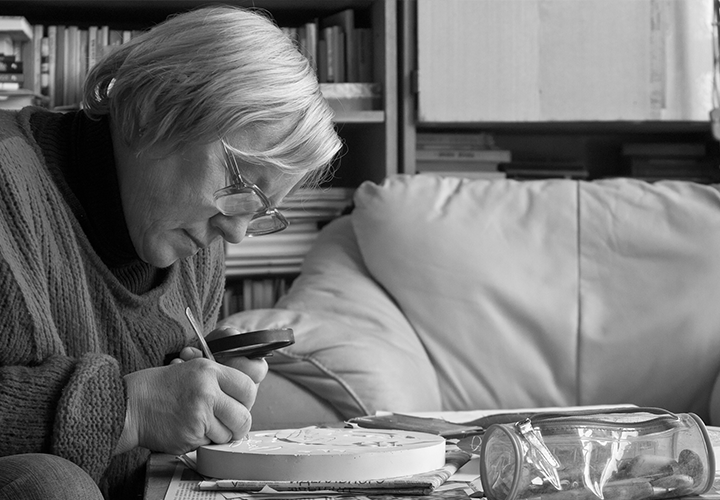
As of 1982, the partially restored fragments of the Lestene Church were on display at the Rundāle Palace Museum. Now the church is undergoing renovation, and its woodcarvings are being restored to be gradually taken back to Lestene.
The restoration of the Lestene Church and woodcarvings by Nicolaus Söffrens is one of the most important projects in protecting the cultural heritage of Latvia. The participation of each and every citizen in this project is of vital importance.